Oil & Gas
Track the exact asset from yard to rig and back again
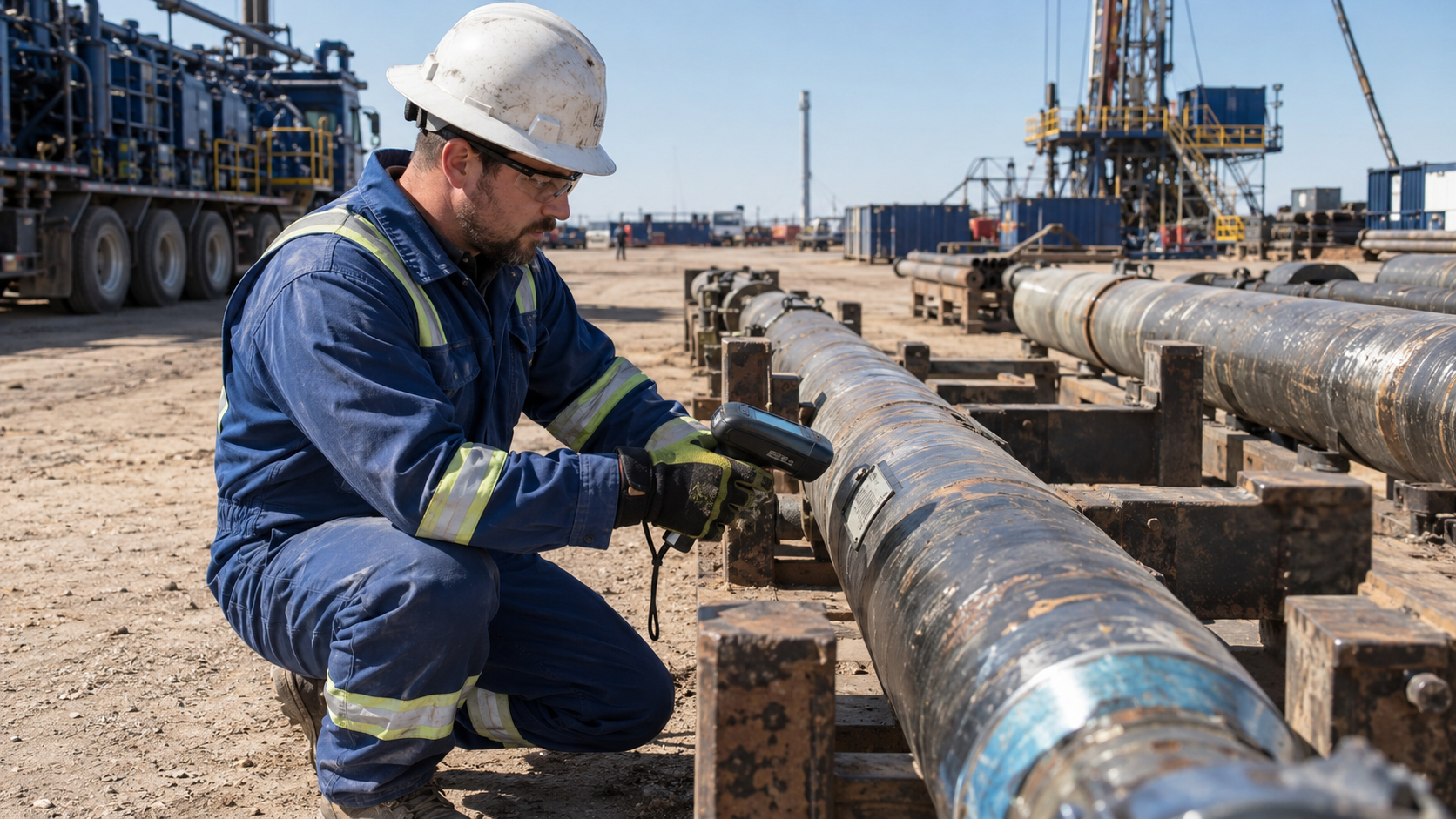
Oilfield operations need more than quantity and warehouse location. High-value equipment can move through service centers, yards, trucks, rigs, wellsites, jobs, inspections, repairs, and return cycles while remaining the same serialized asset.
ScanWorkX can bring barcode-enabled mobile execution closer to those physical movements for organizations using Microsoft Dynamics 365, helping field and supply-chain teams capture approved asset and inventory activity where the work occurs.
How many do we have and where are they?
Traditional warehouse control is primarily organized around items, quantities, availability, storage locations, and material flow.
Which exact asset is this and is it ready for the next job?
Serialized equipment may also require identity, custody, operational assignment, condition, ownership, usage history, maintenance status, and certification context.
Oilfield Tracking Classes
One oilfield can contain several fundamentally different asset types
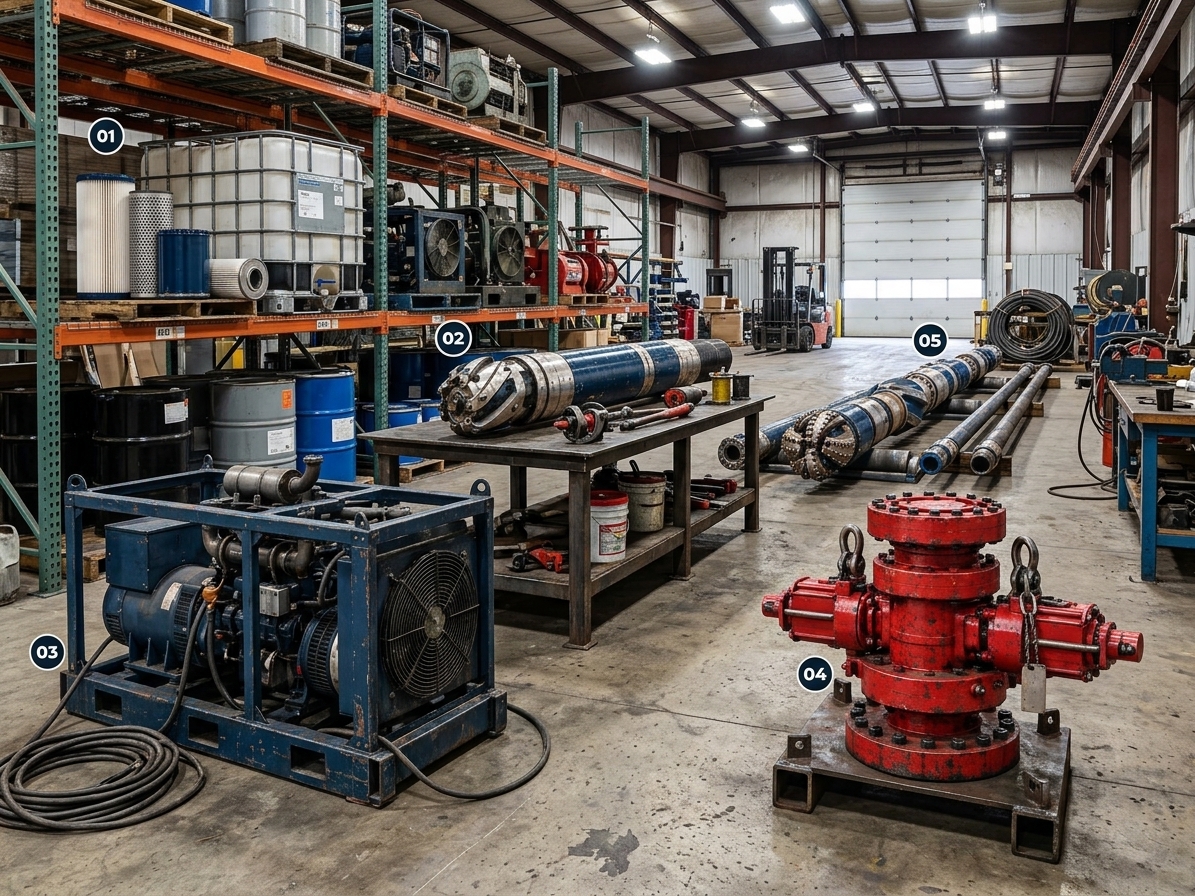
Treating everything as conventional inventory can hide important operational differences. Some materials are consumed, while other equipment is serialized, reusable, rented, controlled or temporarily assembled into larger equipment packages.
Consumable Inventory
Filters, gaskets, lubricants, chemicals, seals, fasteners, PPE and disposable components can behave much like normal quantity-based warehouse inventory.
Serialized Repairables
Mud motors, pumps and other reusable equipment remain individually identifiable as they move repeatedly between field use and supporting operations.
Rental Assets
Generators, specialty tools and other rented equipment require individual identification so the organization can distinguish them from company-owned equipment.
Controlled Assets
Pressure equipment, lifting equipment, gauges and other controlled assets may carry additional documentation associated with the individual serialized record.
Equipment Assemblies
BHAs, skids and tool packages can temporarily combine multiple serialized components while each component retains its individual identity.
Operational Asset Context
One serialized asset can carry several different operational identities
Oilfield teams may need to distinguish where equipment physically is, what work it is assigned to, who currently has responsibility for it, and who actually owns it. Those dimensions are related, but they are not the same thing.
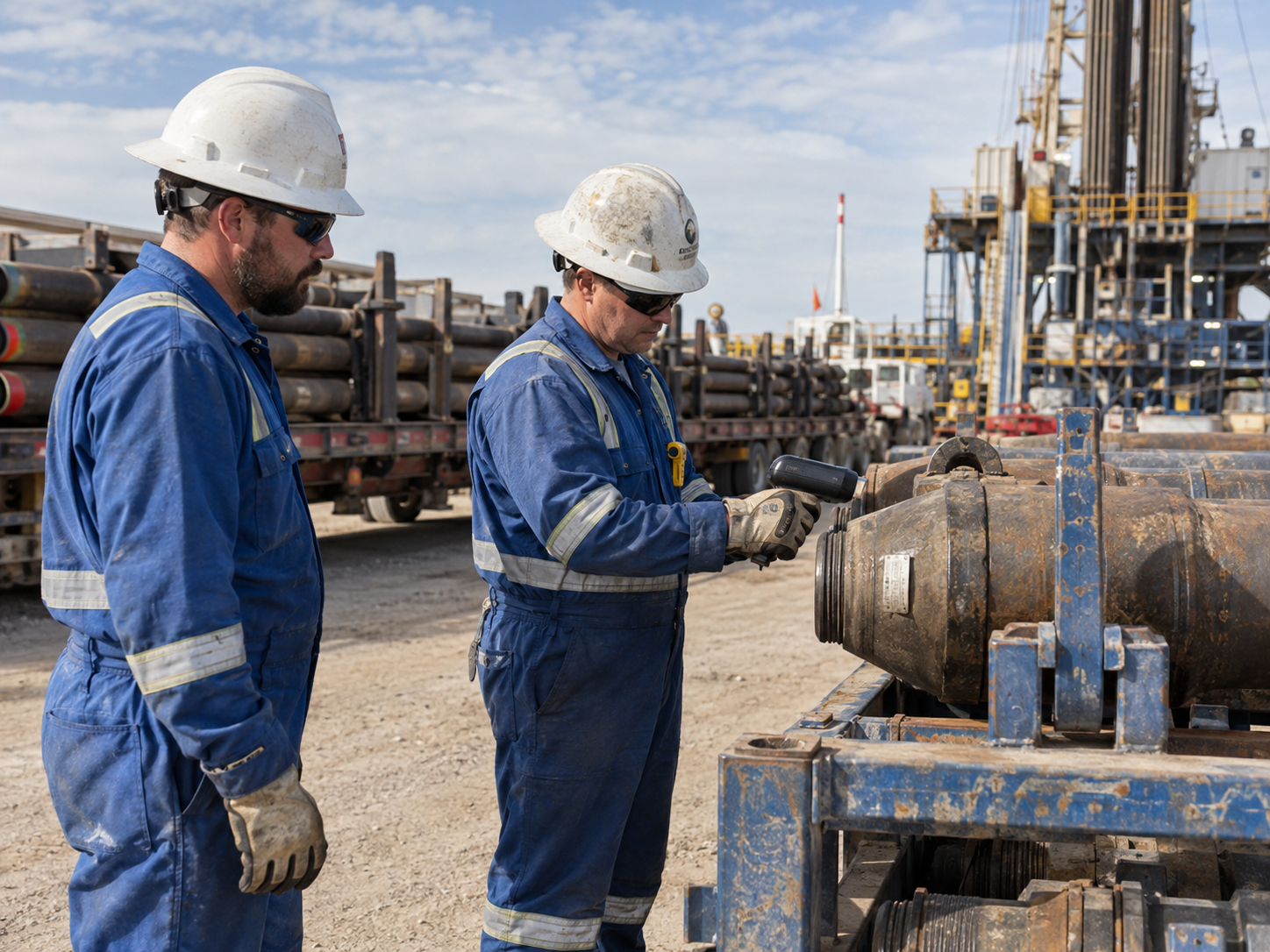
Physical Location
Record where the individual asset is currently positioned independently from its work assignment, custodian and owner.
Job Assignment
Associate equipment with the applicable job, rig, well, equipment package or other operational work context.
Current Custody
Identify the warehouse team, carrier, rig crew, technician, contractor, customer or service organization currently responsible for the asset.
Ownership
Distinguish company-owned equipment from rental, leased, customer-owned, consigned or contractor-owned assets.
Custody changes create their own transaction history
A controlled handoff can record the asset identifier, from-party, to-party, date and time, location, job context and other approved information. This creates a clearer record of responsibility as equipment moves between warehouse teams, transportation providers, field personnel and service organizations.
Equipment Readiness
An asset can be present and still not be ready for another job
Reusable oilfield equipment can accumulate operating history, change condition and reach inspection or service thresholds. Operational availability therefore requires more context than simply confirming that the asset is physically on hand.
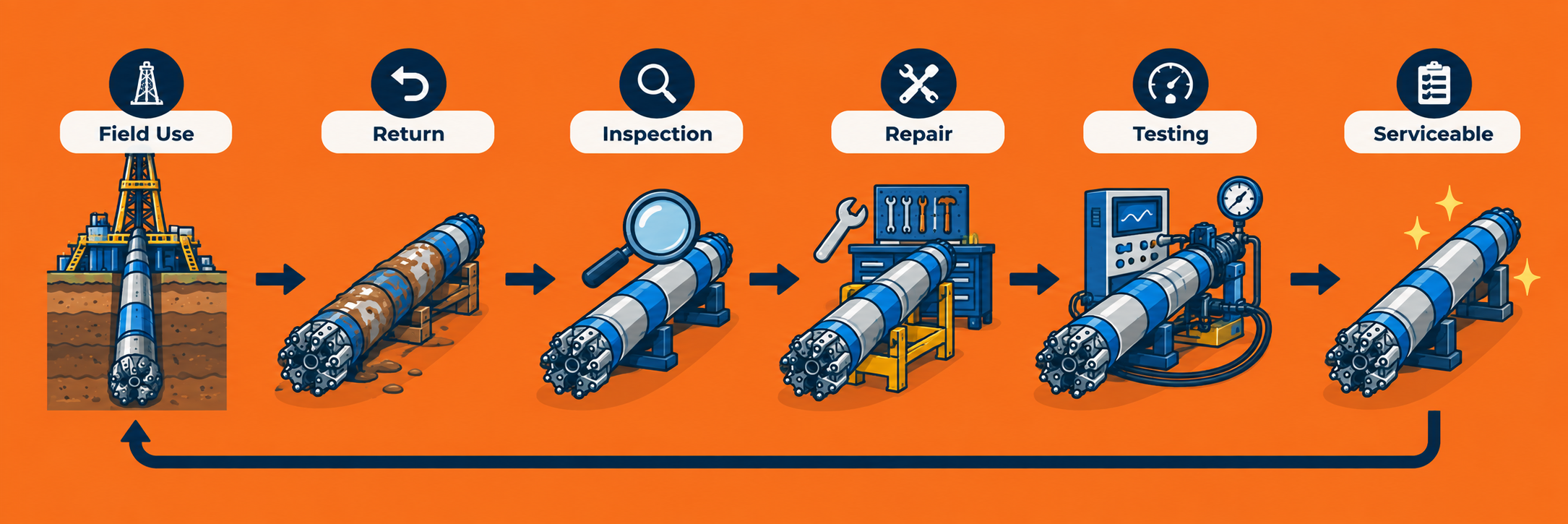
Condition
Reusable equipment may move through states such as deployed, returned, dirty, inspection required, repair required, testing, serviceable, quarantined or another approved operational status.
Usage & Maintenance
Service decisions may depend on operating hours, runs, wells, footage, pressure cycles, engine hours, calendar intervals or other measurements associated with the individual asset.
Inspection & Certification
Where required, an asset record may need inspection dates, test information, calibration details, certificate references, expiration dates and the next required review.
From Controlled Storage to the Field
The tracking environment changes as equipment gets closer to the well
A service center can use structured warehouse locations. An equipment yard relies more heavily on larger outdoor zones and asset positioning. At a drilling rig or wellsite, tracking becomes closely tied to the operational environment rather than conventional rack-and-bin storage.
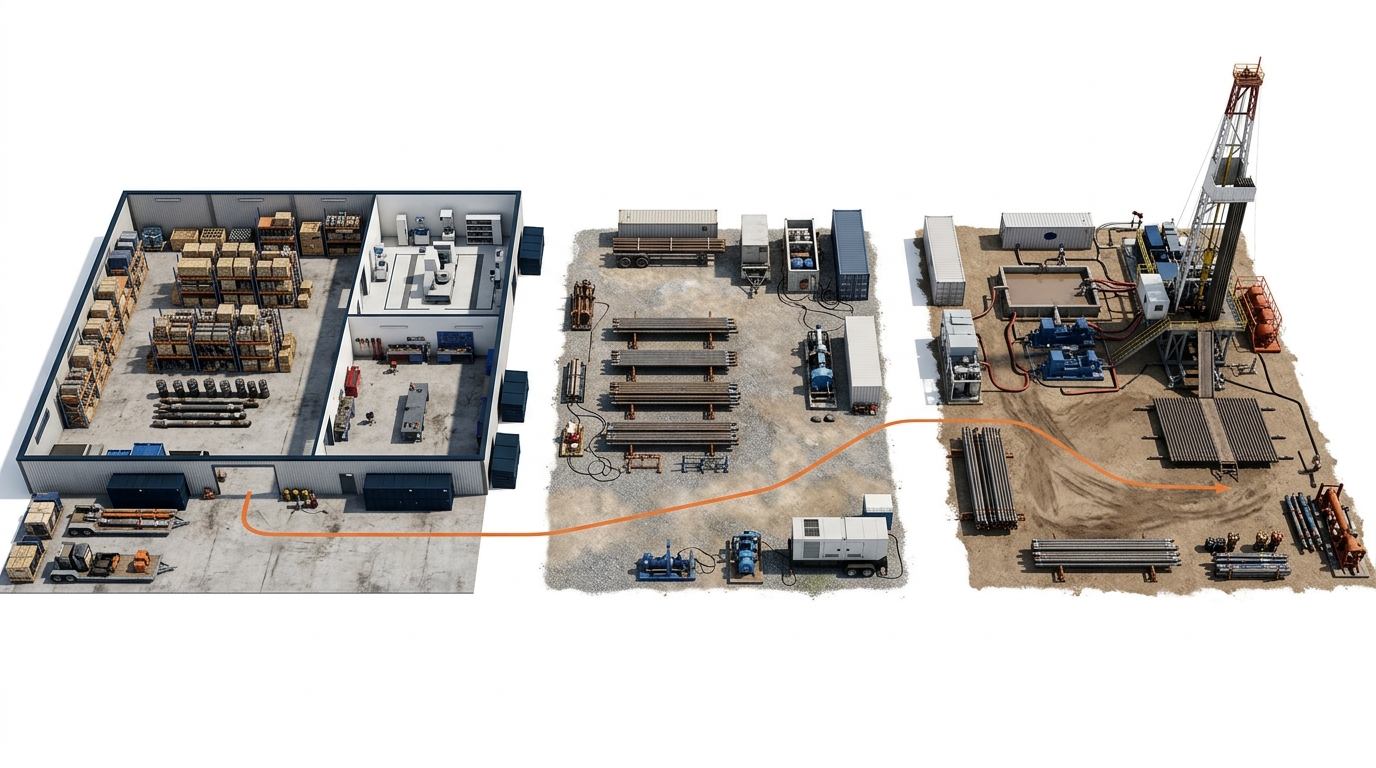
Service Center
Structured facilities can include receiving, serialized storage, tool cribs, secure areas, inspection spaces, repair bays, quarantine and ready-for-deployment staging.
Equipment Yard
Outdoor operations may contain pipe racks, skids, containers, trailers, generators, pumps and heavy equipment spread across much larger and more dynamic storage areas.
Rig & Wellsite
Field locations can include pipe racks, tool staging, BOP areas, mud systems, service-company containers, laydown areas and other operational positions.
Field mobility needs a different user experience
Remote drilling operations may need rugged mobile devices, scan-friendly screens, barcode or RFID identification, camera capture, GPS context, timestamping and support for intermittent connectivity or delayed synchronization. The exact configuration should follow the customer's field conditions and approved system design.